
Plenty of companies ask whether ChatGPT recommends them. We looked in two ways. First, Google Analytics: a year of data from 19 sites and apps we work with, from 13 November 2025 to 12 November 2026. Then, on behalf of two companies, we asked ChatGPT and Perplexity 24 questions their customers might ask, and looked at who got cited.
AI sends few visitors, but interested ones, and it sends them to very specific pages.
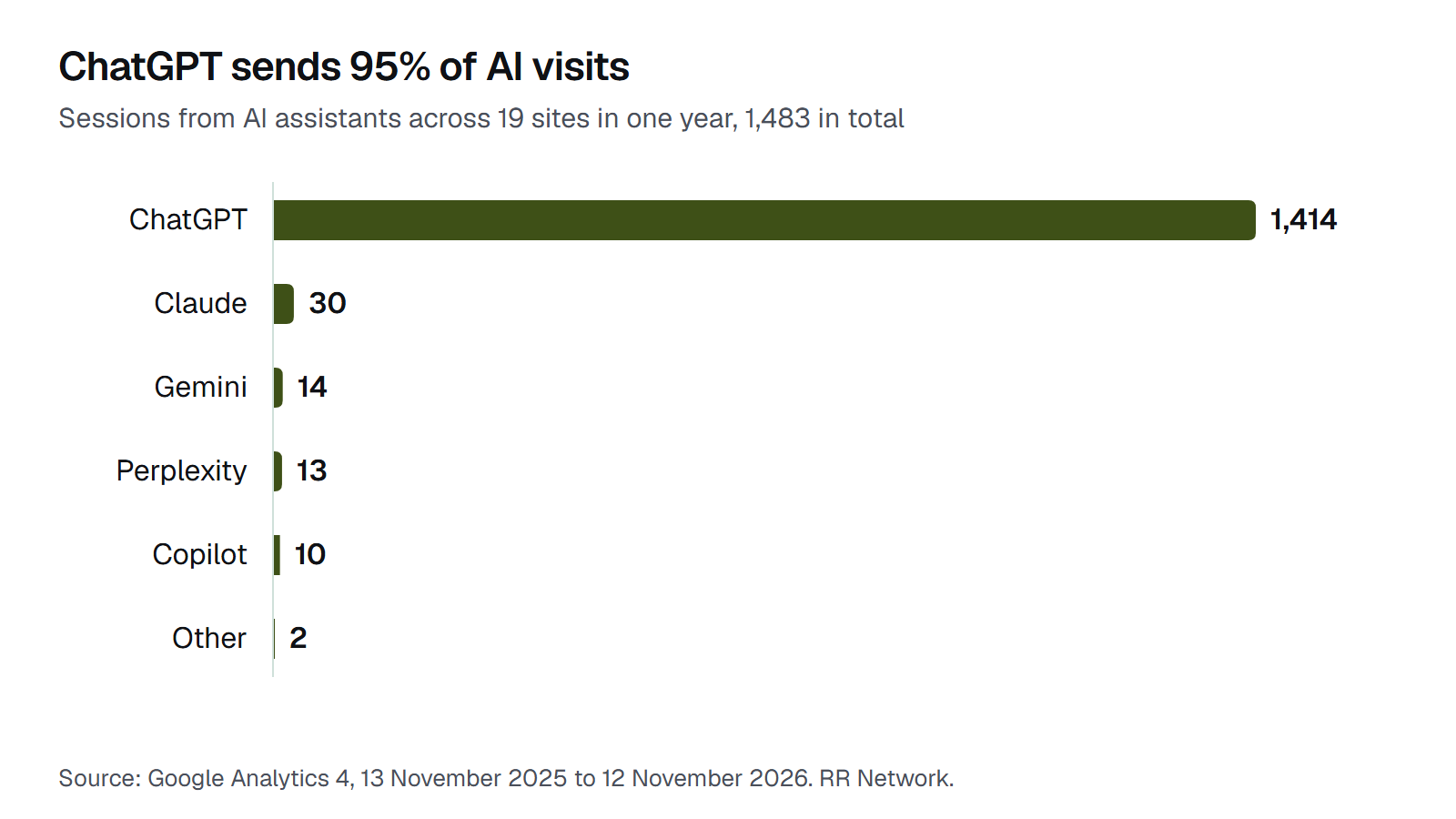
- AI assistants brought 0.17% of all sessions across our 19 sites. Without one large site that skews the total, about 0.6%. 95% of it is ChatGPT.
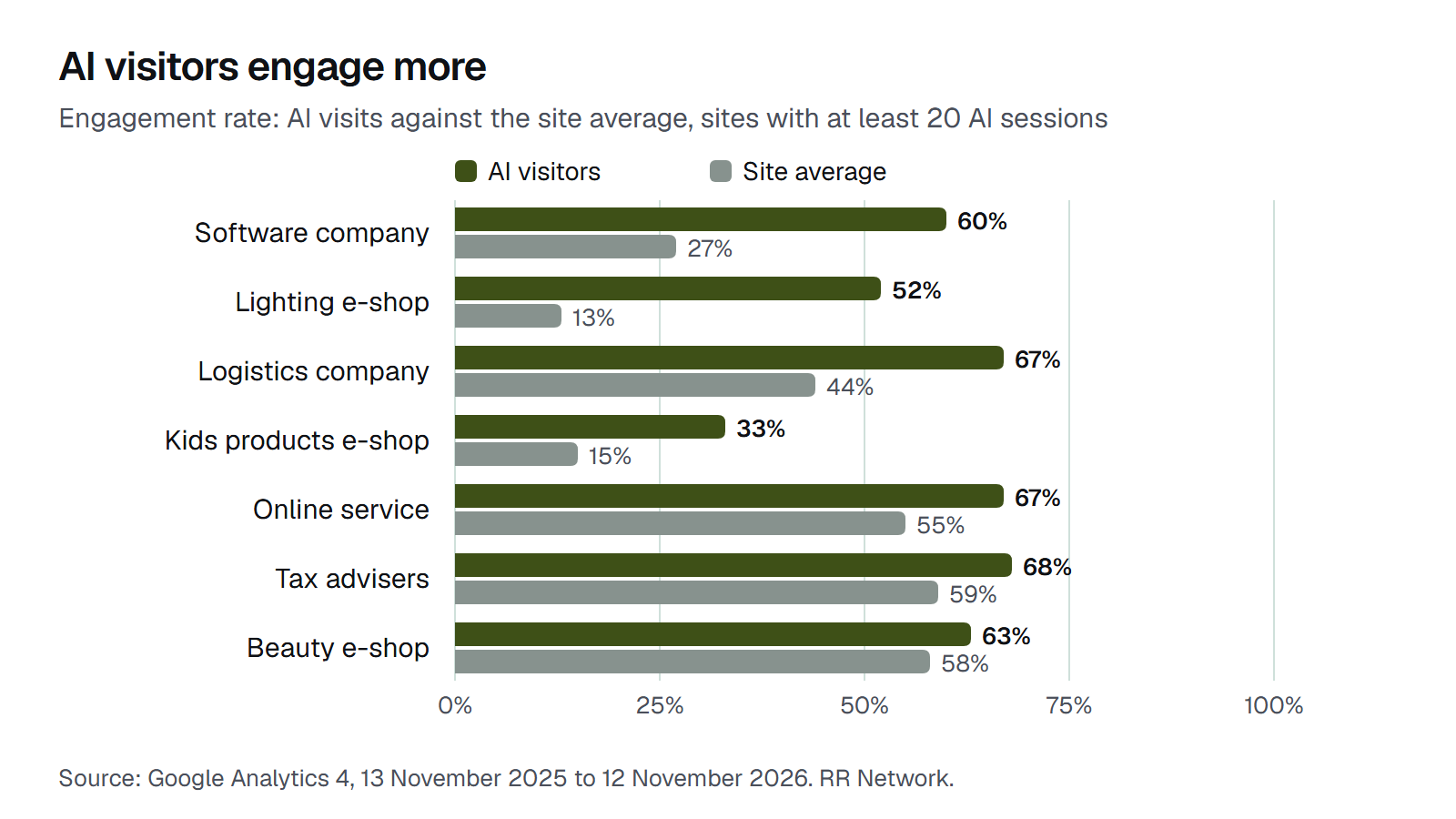
- AI visitors engage more than average almost everywhere, and on some sites they buy or get in touch.
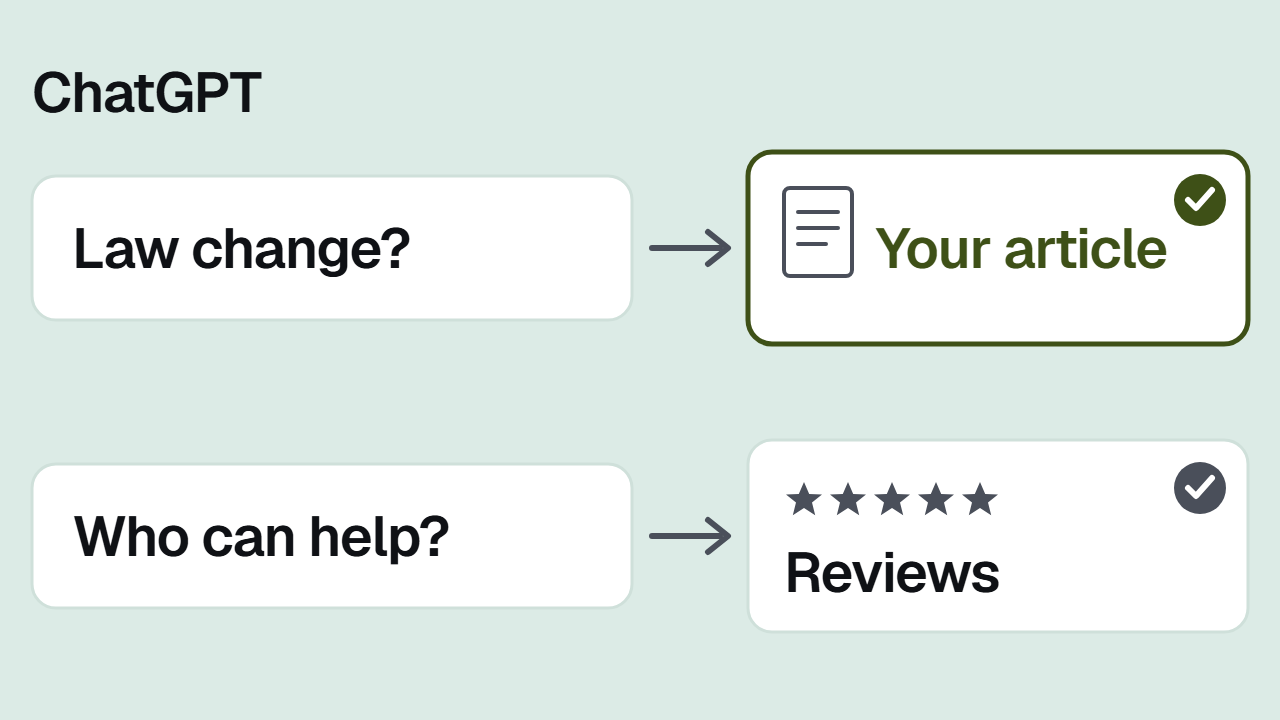
- ChatGPT cites pages that are first to answer a new, specific question clearly: a law change, a price, a comparison, a particular product.
- Asked "who can help", it recommends companies that have reviews, directory listings and comparisons written by others.
- The Google Analytics "AI Assistant" channel only works on these sites from June 2026. For earlier data, look by source.
How many visitors does AI send?
Not many. Out of 874,343 sessions in the year, AI assistants brought 1,483, which is 0.17%. One large site with 665,000 sessions pulls that number down a lot. Without it, AI's share is about 0.6%.
Almost all of it comes from ChatGPT: 1,414 sessions, or 95%. Claude brought 30, Gemini 14, Perplexity 13 and Copilot 10.
But these are good visitors. On almost every site they engage more than the average visitor. On one site 60% of AI visits were engaged, against 27% for the site as a whole. On another, 52% against 13%. On a tax advisory firm's site, 22 AI visits produced 21 key events.
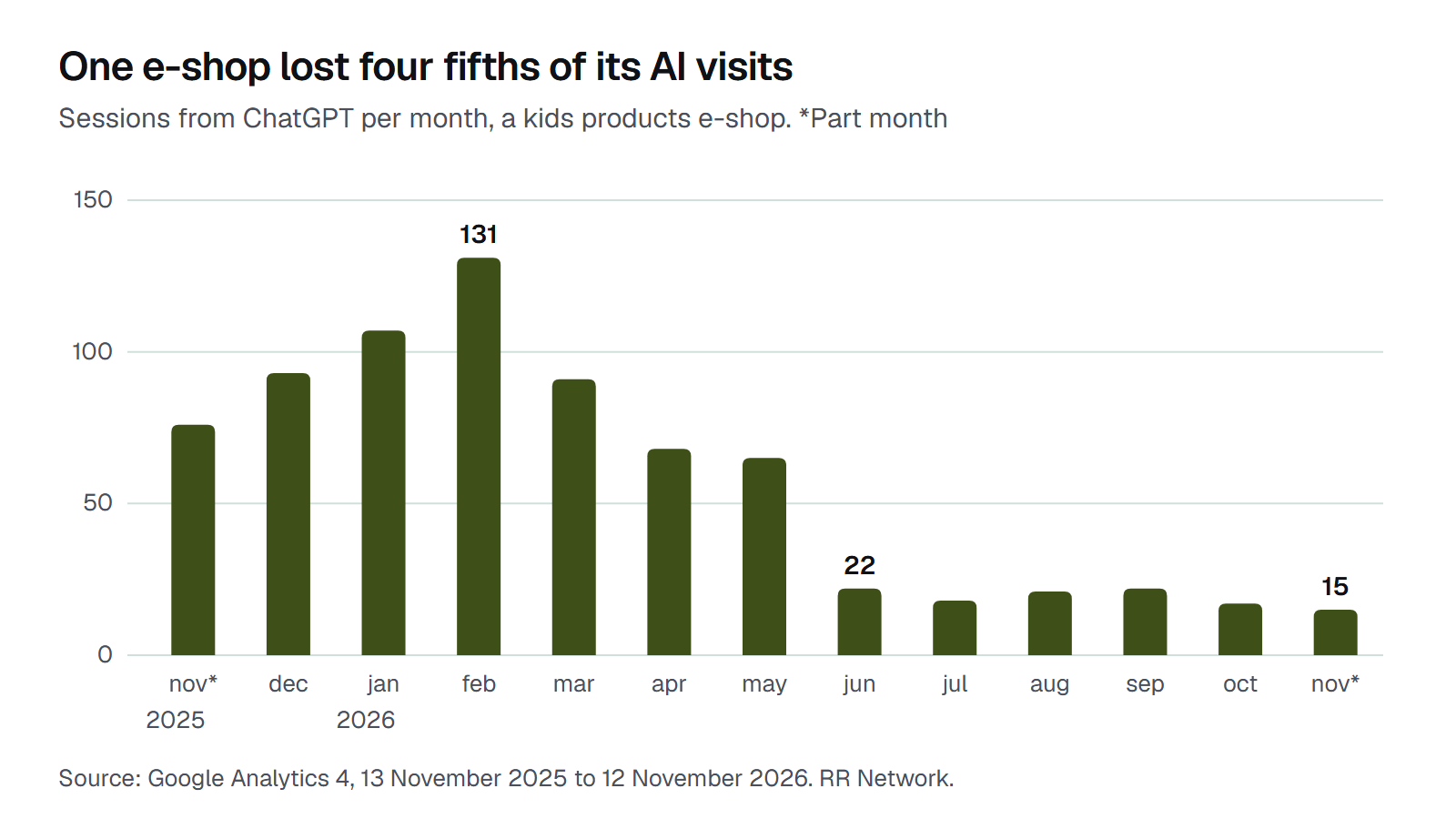
One kids' products e-shop is the exception in every direction. From November to May, ChatGPT brought it 14 to 21% of all its sessions, and over the year AI visitors brought in almost 15% of the shop's revenue. Since June that flow has shrunk about fivefold. We're still working out why. It shows that AI traffic can change very quickly and without warning.
Which pages does AI send people to?
Not only the homepage. Often to specific pages that answer a specific question:
- Tax advisers: articles on the 2026 corporate income tax changes, company share categories and valuation services.
- Logistics company: the page on dangerous goods transport.
- Software company: the pricing page, pages on removing content from particular platforms, and a comparison with a competitor.
- E-shops: individual product pages, such as kids' beds and Christmas lights, rather than categories.
Here's what that looks like in Google Analytics: a beauty e-shop, and the first pages ChatGPT visitors land on. The homepage, products, contacts, the shop.
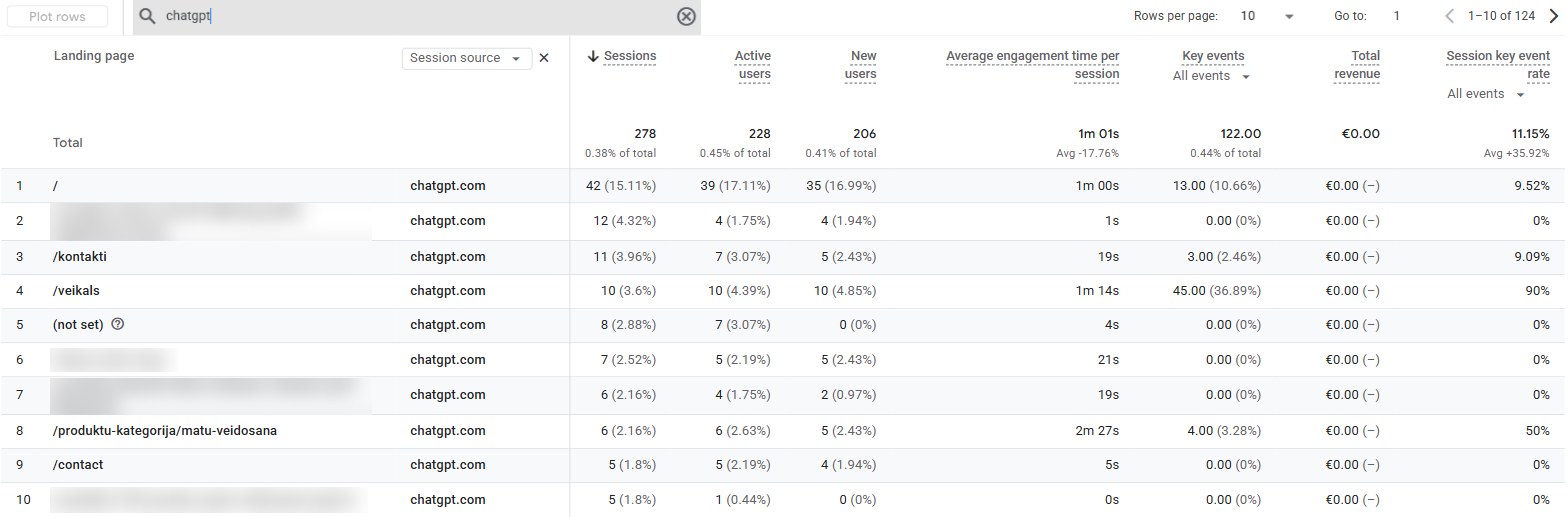
Google Analytics 4, 13 November 2025 to 12 November 2026. Product and brand page names blurred.
The device split is clear too. E-shops get AI visitors on phones (81 to 87%), business services get them on desktop (74 to 95%).
What we asked, and who got cited
On behalf of two companies we asked 12 questions each, in Latvian and English, the kind their customers might ask. We asked each question twice in ChatGPT (temporary chat, personalisation off, free plan) and once in Perplexity, whose free limit stopped the test after 19 questions. The test ran on 13 November 2026.
A tax advisory firm in Riga. ChatGPT cited it in 4 of 24 answers. All four were about new law changes the firm wrote about early: the 2027 changes (in both runs), the 2026 changes in English, and share categories. These are the same pages Google Analytics shows AI visitors landing on.
On questions about its core services, transfer pricing, valuation and "who can help", it wasn't cited once. There ChatGPT recommended the big advisory firms, service directories and its own map card with ratings.
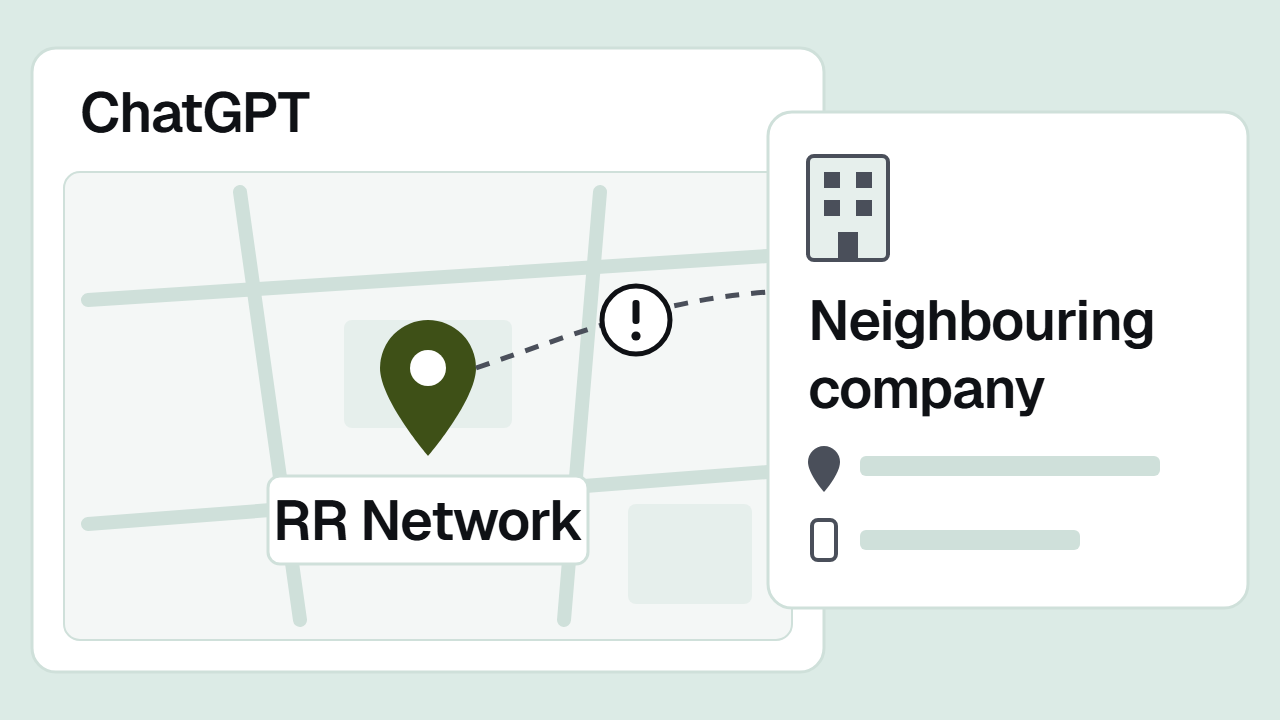
Here's what such an answer looks like. Asked who in Riga can help with transfer pricing documentation, ChatGPT names specific firms with addresses and phone numbers, and shows a map with ratings below them.
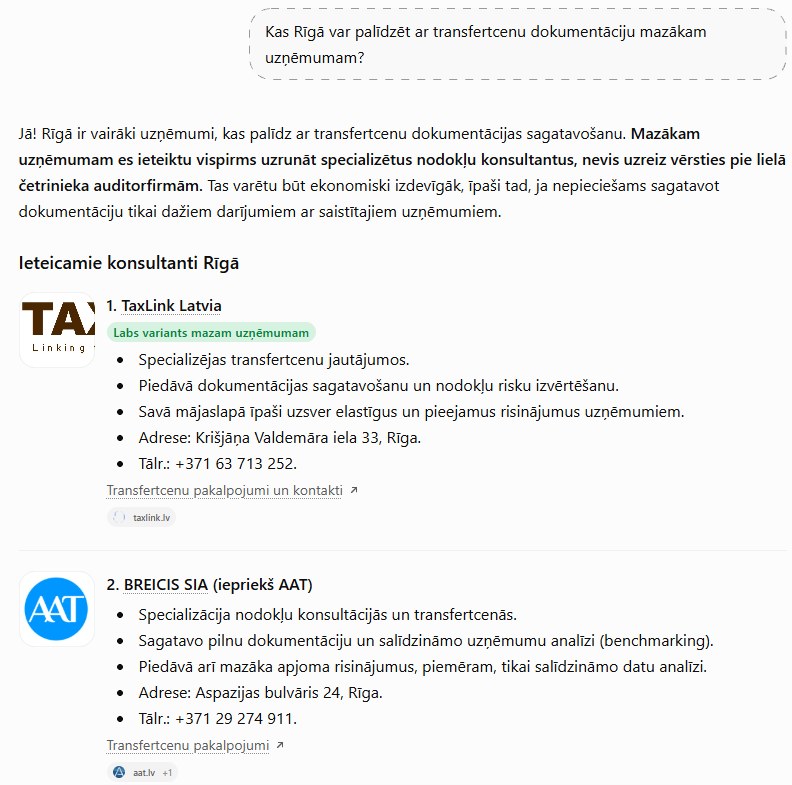
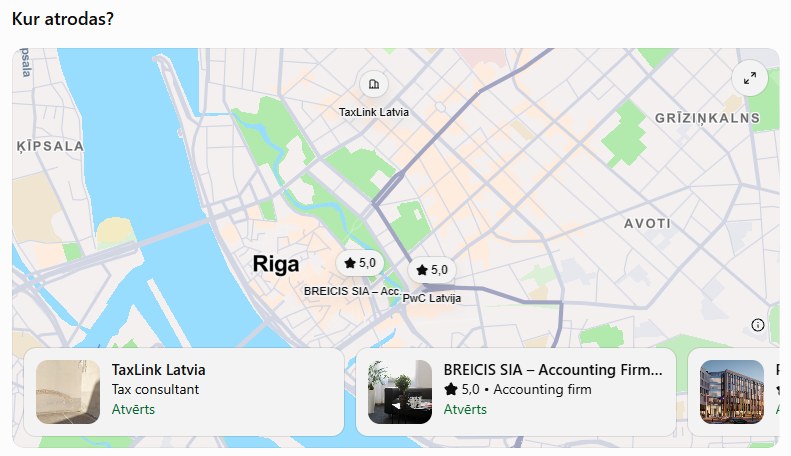
ChatGPT temporary chat, screenshot taken 17 November 2026.
A software company outside Latvia. ChatGPT cited it in 4 of 24 answers. In one answer about a competitor's alternatives it came first, but when we repeated the same question, it was no longer on the list. Asked "is this company legit", ChatGPT said yes both times, but advised caution, pointing to an average review score and specific complaints.
Competitors won with comparisons ("X vs Y", "alternatives") and with a separate page for each platform. The company has pages like that too, but they didn't come up in these tests.
What to learn from it
- Be first to write about specific changes in your field. Law amendments, new rules, price changes. Whoever answers clearly and early gets cited.
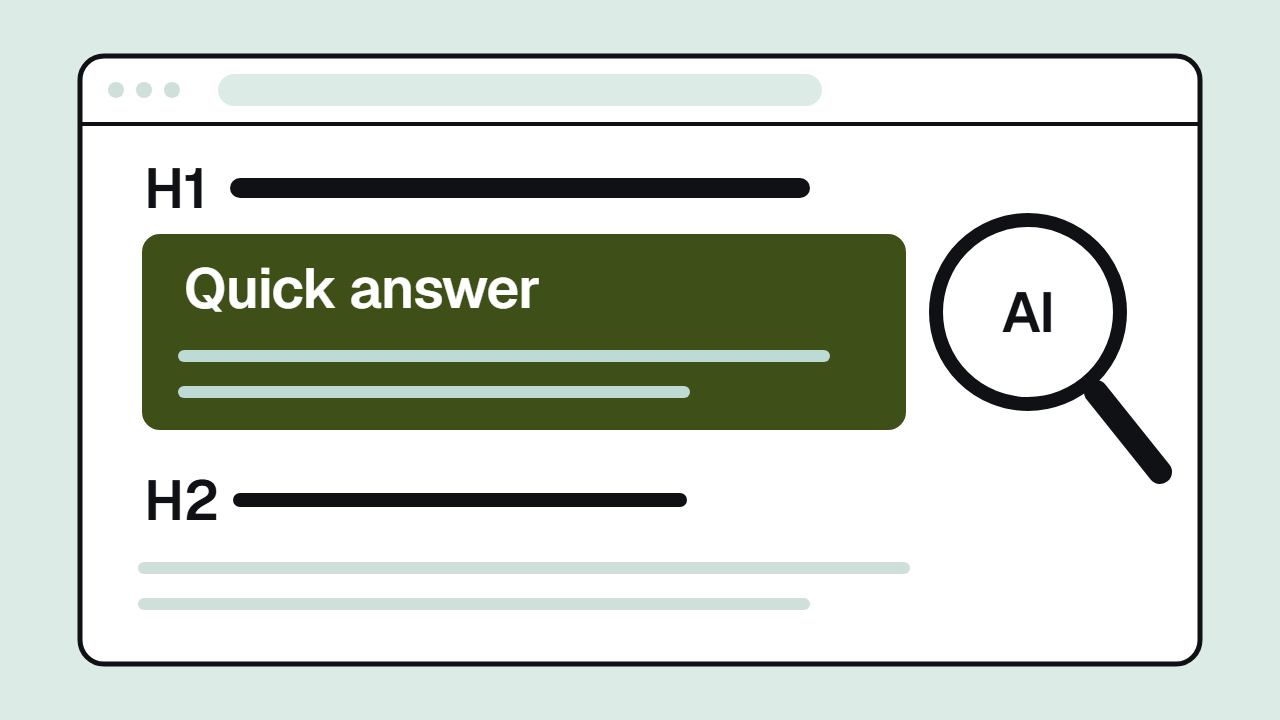
- Answer the actual question on your service pages. Thresholds, deadlines, a worked example, a price. A general "we help with tax" doesn't get cited.
- Look after your reviews and directory listings. ChatGPT answers "who can help" with maps, ratings and directories. If you're not there, you're not in the answer. We wrote about checking your listing in ChatGPT's map in How to claim your business in ChatGPT.
- Get into comparisons other people write. AI often cites someone else's roundup, not your page, and you're either in it or you're not.
- Write comparisons and "alternatives" pages yourself, with price, coverage and turnaround in the first paragraph, so they can be quoted.
- Answer complaints in public. What reviews say about you, ChatGPT repeats.
We wrote more about writing answers AI can cite in AEO: how to write answers AI can cite.
How to see it in your Google Analytics
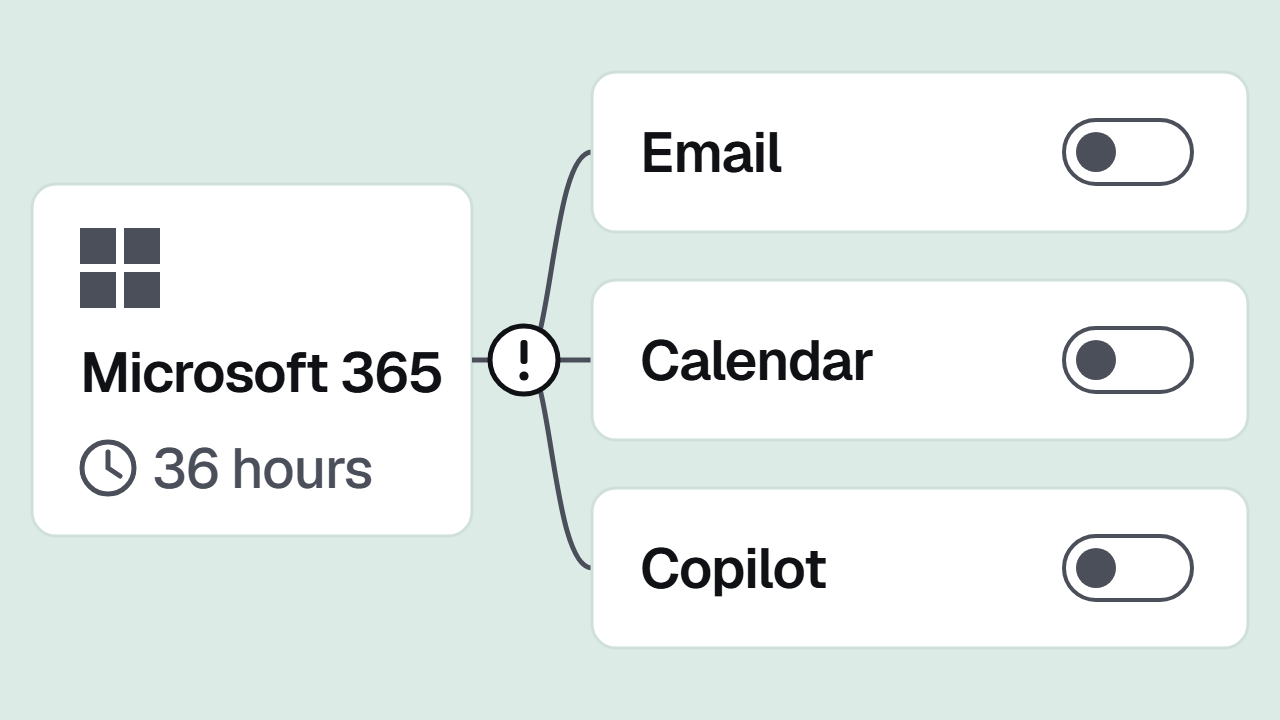
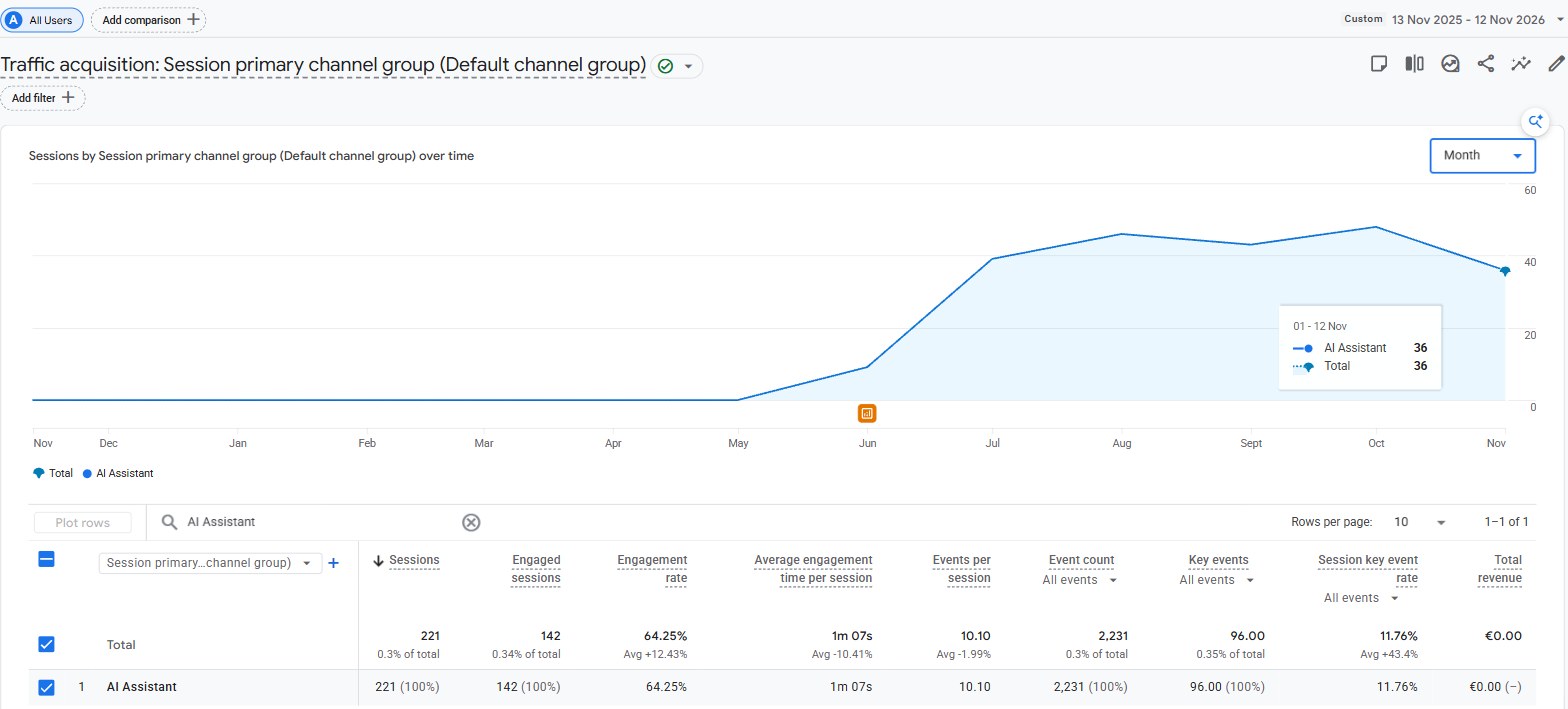
Google Analytics 4 now has an "AI Assistant" channel, but on our sites it only started working in June 2026. Before that it caught none of 897 AI visits: they sat in "Unassigned" and "Referral". Since June it catches 97%.
An example from one e-shop. The "AI Assistant" channel shows zero until June:
The same data by source. ChatGPT visitors were there all year, and there are more of them (278 against 221):
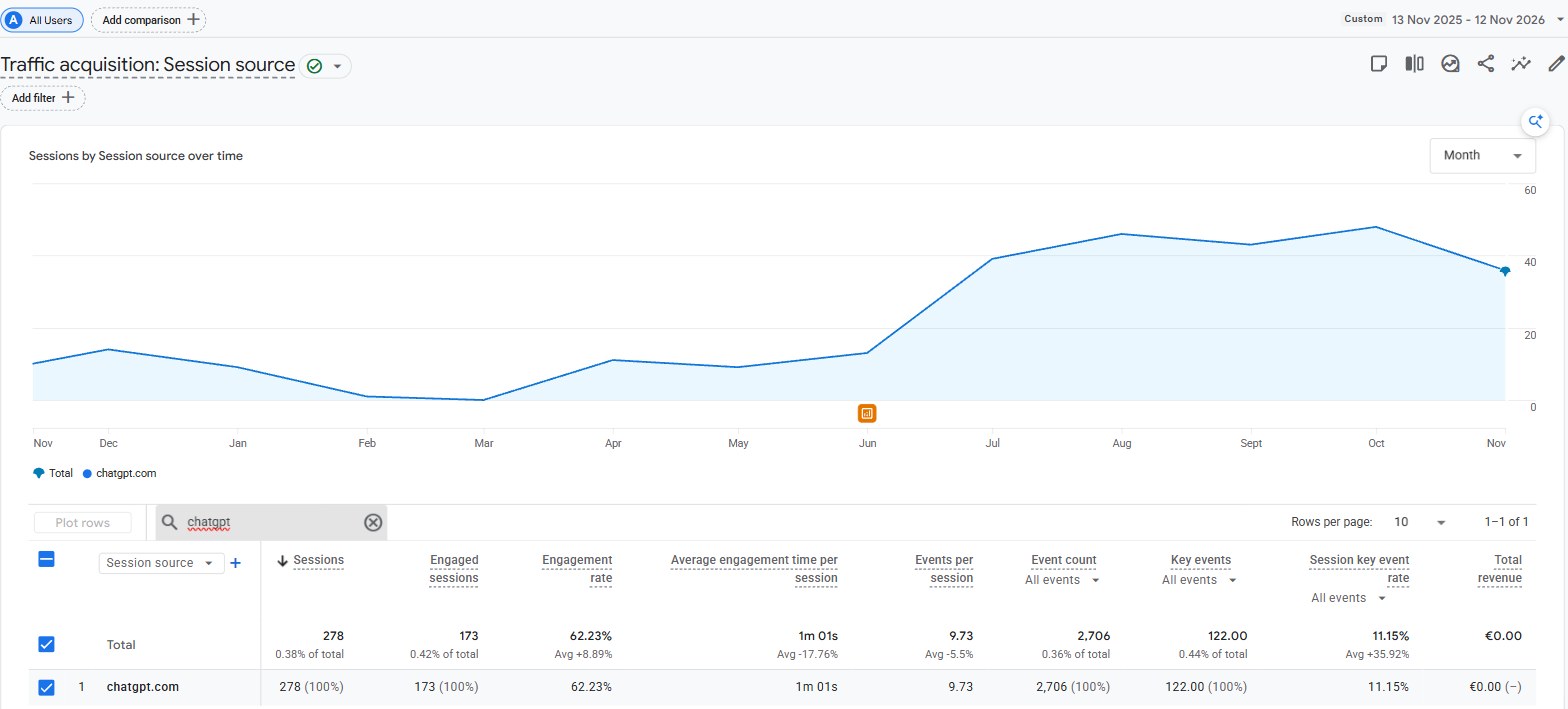
Google Analytics 4, 13 November 2025 to 12 November 2026.
To see the trend over the year, create a segment on session source that matches this regular expression:
chatgpt.com|chat.openai.com|perplexity.ai|claude.ai|gemini.google.com|copilot.microsoft.com
Then look at three things: which pages people land on, how many visits are engaged, and whether there are key events. That shows you what AI already cites from your site.
Limits
- The data comes from 19 sites we work with, not the whole market. They're a mix of e-shops, service companies and software, in Latvia and abroad.
- Google Analytics doesn't see everything. If someone copies a link out of ChatGPT, or opens it from the app without a referrer, the visit shows up as direct.
- The tests are a sample, not a ranking. Each question was asked once or twice on free plans from Latvia, and answers change between runs.
FAQ
How many visitors does ChatGPT send to a company website? Across our 19 sites, 0.17% of sessions on average, about 0.6% without one large site. On one e-shop, for a while, up to a fifth.
Do AI visitors buy? On some sites, yes. On one e-shop AI visitors brought in almost 15% of revenue over the year; at a tax advisory firm, 22 visits produced 21 key events.
Why doesn't ChatGPT recommend my company? The most common reasons in our tests: the service page doesn't answer the specific question, there are no reviews or directory listings, and others have already written comparisons you're not in.
How do I see AI visits in Google Analytics? With a segment on source. The "AI Assistant" channel has only worked on our sites since June 2026.
If you'd like us to look at what ChatGPT already cites from your site and where you're missing, book a free 30-minute call.